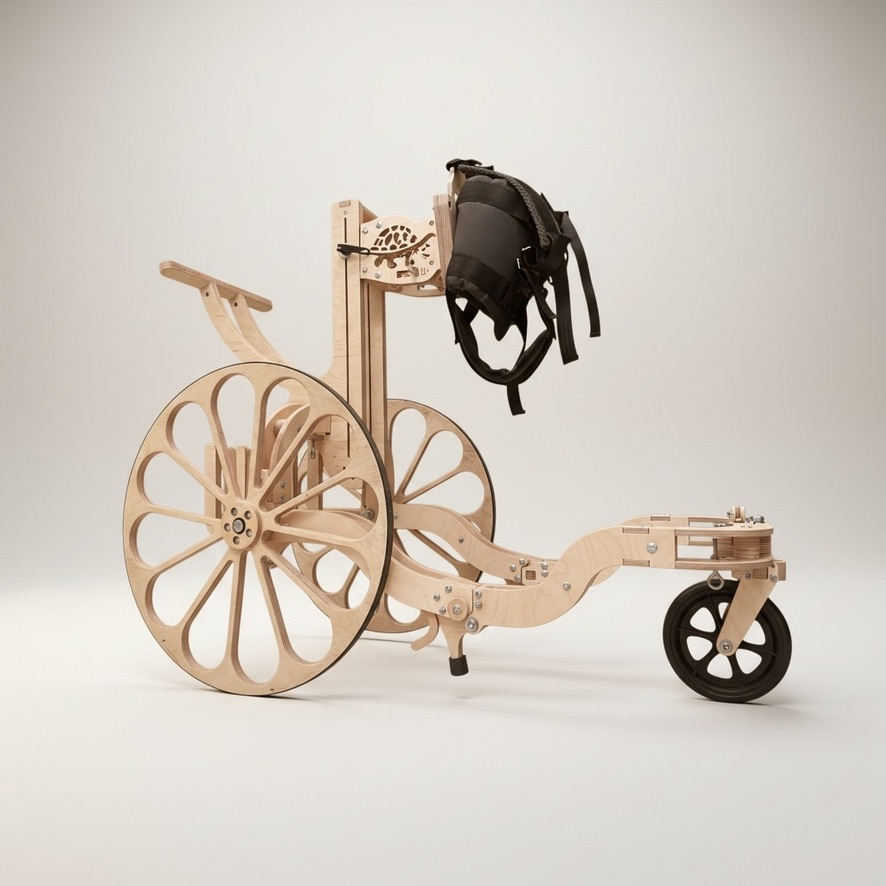
Leonardo: A Pediatric Wooden Gait Trainer
How I simplified complex medical tech in South Africa to create an all-terrain wooden gait trainer. A project at the crossroads of low-tech innovation.
Around 17 million people worldwide are affected by cerebral palsy. The immense neuroplasticity of a child's brain offers a critical window of opportunity up to the age of eight to learn how to walk. Western assistive devices are often unaffordable for affected families in the Global South, difficult to repair, and fail on uneven terrain. This is where my design comes in: The "Leonardo" gait trainer bridges the gap between costly Western medical technology and the harsh reality in developing regions.
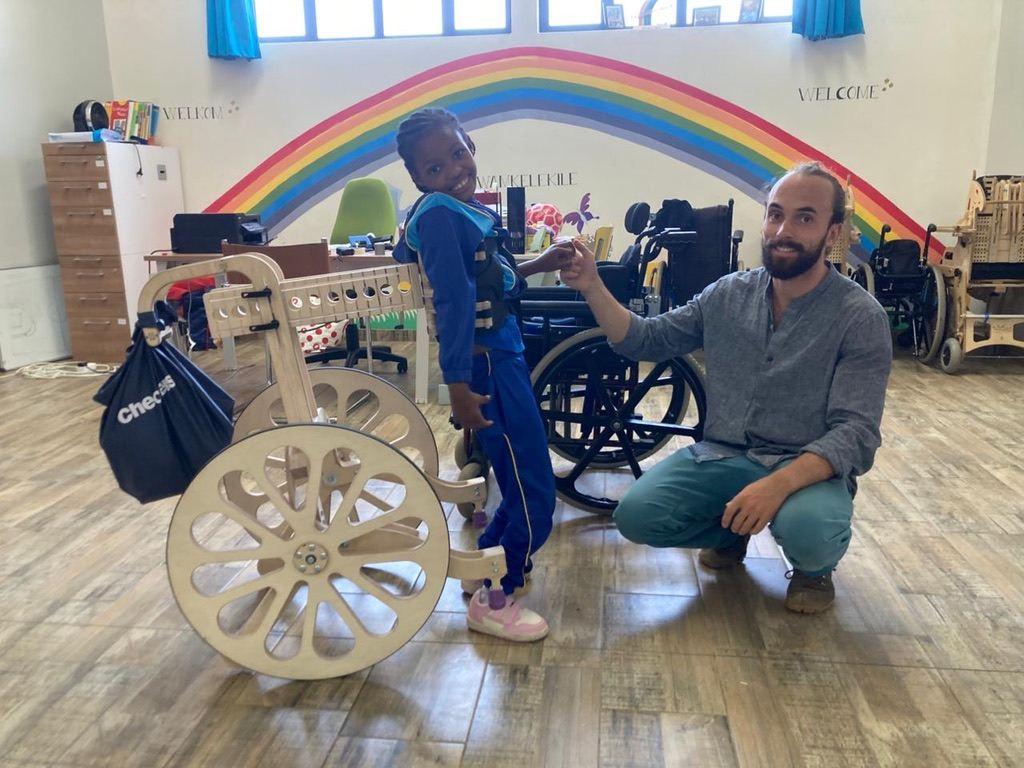
I was initially a bit torn about whether I should prepare this project as an application or an article at all. I am neither a trained designer nor a traditional journalist. I am actually a computer scientist and orthopedist, but with an absolute love and passion for functional design. When a product designer friend of mine saw pictures and videos of my crazy "wooden cart," he immediately said I absolutely had to document and share this project. Therefore, I will now describe my project in great detail. The text might have turned out a bit long, but that is necessary to tell everything exactly as I experienced it. If you read it through, I am of course delighted, and otherwise, feel free to just look at my pictures.
The Origin: From India to South Africa
The story of this project began a few years ago when a good friend of mine was volunteering for an organization in South Africa. He made orthoses for poor children there. The sad thing is that almost no one there knows how to make orthoses properly. That is why his help and the passing on of his knowledge were bitterly needed. He talked about the beautiful country, the gorgeous beaches, dolphins, and how Jeffreys Bay is also one of the best, if not the best place in the world for surfing.
I myself had also worked abroad through my work as an orthopedist. In India, I made prosthetics for children and experienced firsthand what the impoverished population has to struggle with. Nobody has the knowledge of how to make a good assistive device. Devices that do exist are difficult or impossible to import. When you can import them, they are too expensive for the majority of the population anyway. Often, the devices are not designed for local conditions at all. Suddenly, completely different factors matter: long durability, extremely low costs, usability on uneven terrain (not everything is perfectly paved and wheelchair accessible there), and they must be maintainable and repairable even without trained specialists.

In Switzerland and the West, it is often quite the opposite: money is no object, you need trained personnel who adjust and adapt the device every few weeks (when the child grows, for example), you can hardly or not at all repair it yourself, you cannot move on uneven terrain, and you only receive the device in a few select countries anyway.
The Antithesis: High-Tech Research Versus Everyday Usability
When I had the idea to go to South Africa, I was employed at the university of applied sciences in Rapperswil. We were developing exactly this kind of high-tech assistive device there. A highly complex robot that allows paralyzed people to walk. And only straight ahead, with a full battery, two people watching out in case the thing tips over, in indoor buildings with flat floors without obstacles. As you can imagine: completely unsuitable for everyday use. But that is research. I find that important too, because that is precisely where the products of the future are born. You rethink things and make the unthinkable thinkable and tangible. For every problem there is eventually a solution, mostly, at least.
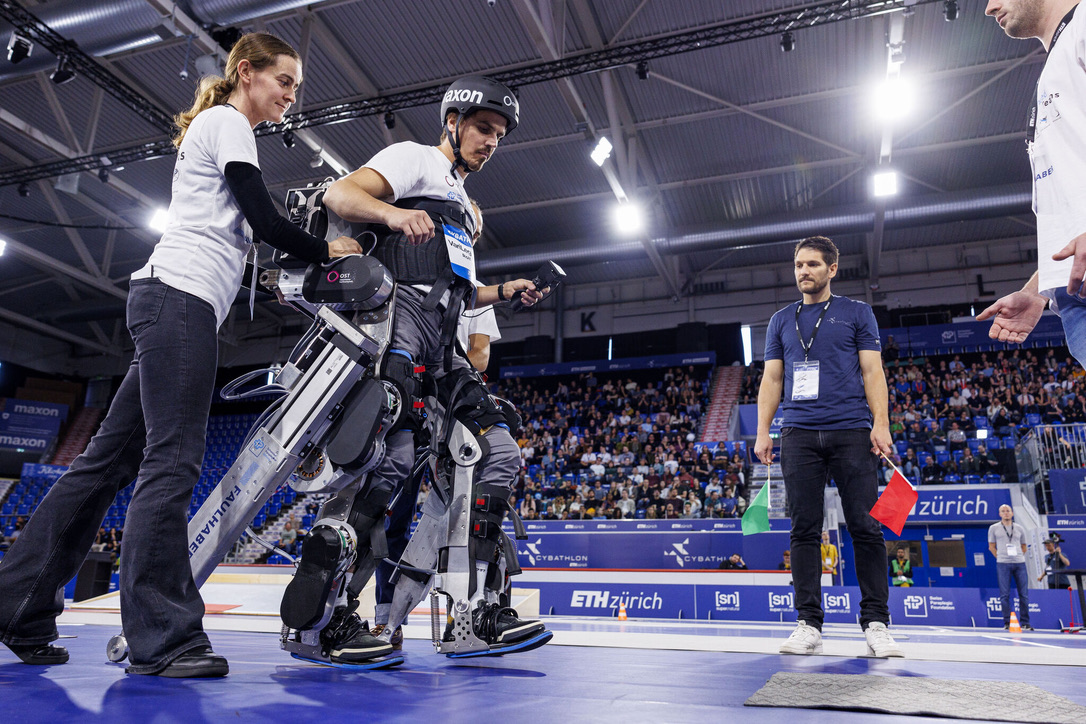
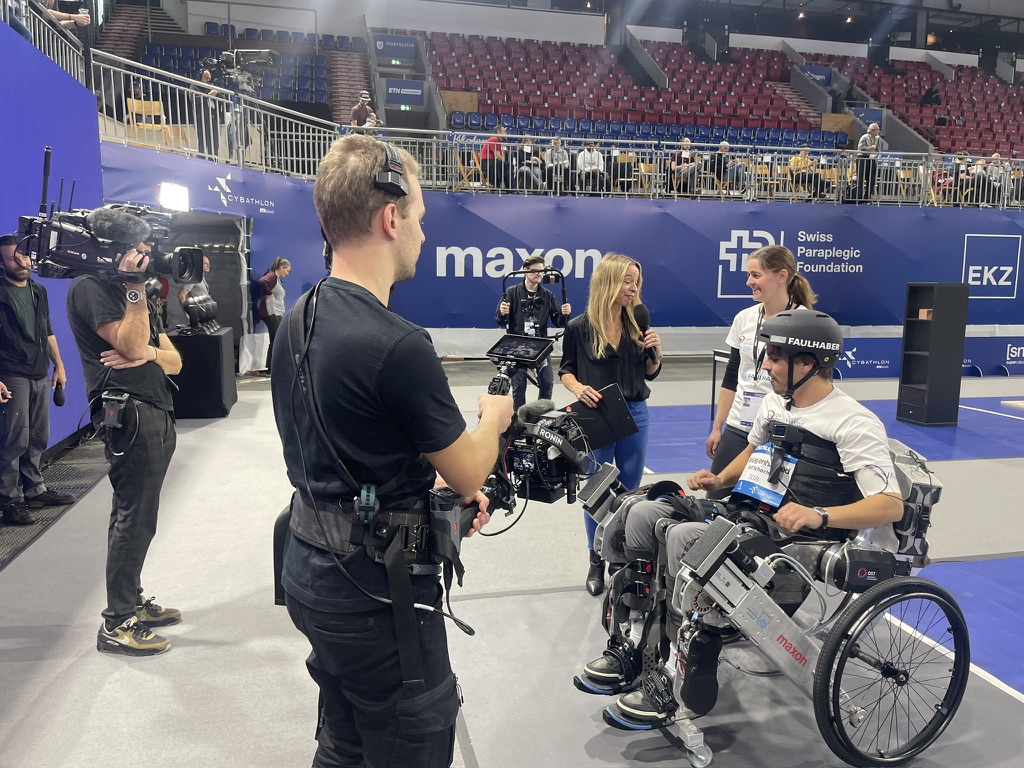
As a trained computer scientist, I was allowed to write software for the exoskeleton there. But I also learned a lot and gained valuable experience in product design: how to manufacture a medical device in a structured way, how to design electronic systems, how to test safely and weigh risks. And above all: how to take time for good design and a solid concept, with the systematic recording of ideas, their evaluation, and the final decision on the best approaches.
The Target Group and Medical Necessity
So one day I called Daniel in South Africa. Together we brainstormed ideas for what kind of product I could develop for his charity "Timion." It seemed fairly obvious that I could make a kind of low-tech exoskeleton there to teach people who cannot walk how to walk. We defined the target group as children with cerebral palsy (CP).
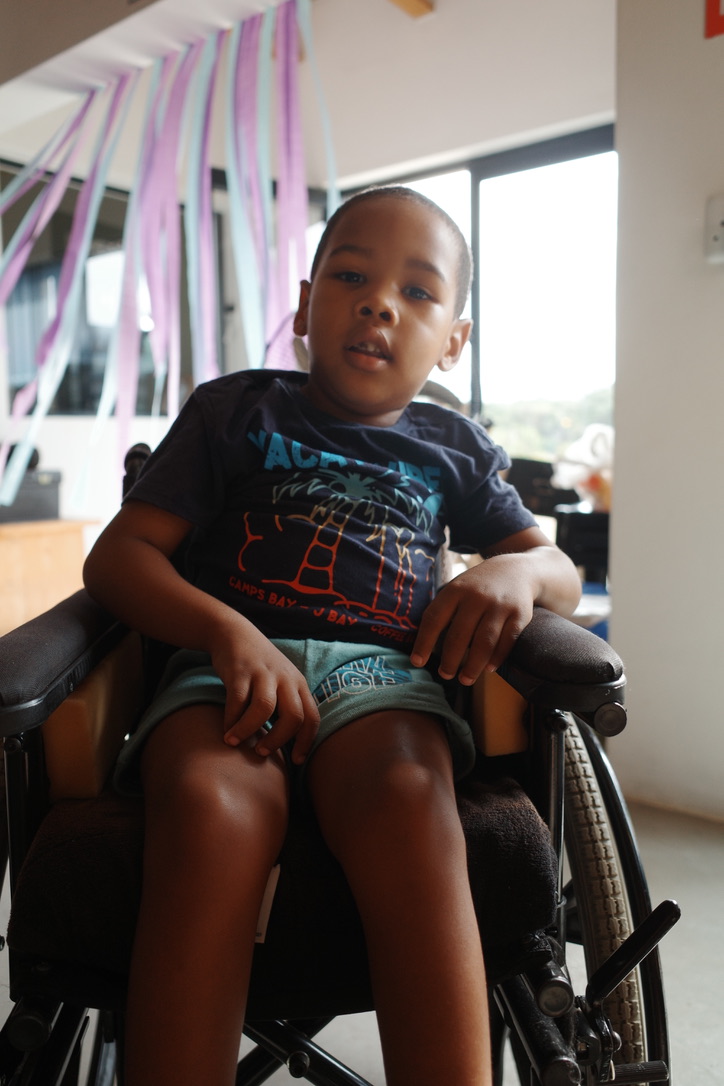
Because there are very many of them there and all over the world, around 17 million people globally, and disproportionately many in South Africa. In this condition, the child suffers from a lack of oxygen in the brain at birth. As a result, entire areas of the brain literally die off. In some people the symptoms are very mild, and when you talk to them you might not even notice. It varies greatly depending on the extent of the damage. But if you are unlucky, you cannot walk properly afterwards, have paralysis, spasticity, and enormous difficulty learning to walk at all during childhood. Most children therefore end up in a wheelchair for life.
But there is an important ray of hope, something important that many do not even know!
Namely, the child's brain has extraordinary neuroplasticity. That means nerves in the brain can rewire, adapt, and learn things that an adult can only learn with great difficulty or not at all. This includes walking. If you do daily training and regular physical therapy with your paralyzed child, the chances are extremely good that the child will learn to walk through these new brain connections and walk through the rest of their life instead of spending it in a wheelchair.
But as mentioned, regular training is absolutely essential for this! More precisely: every single day, ideally up to the age of 8. After the age of 8, the plasticity of the brain decreases, and the goal of going through life without a wheelchair slips further away and eventually becomes impossible. But the cool thing is: you can learn it! Only, anyone who has ever had children knows that beyond a certain age and weight, you can no longer hold the child up by the hips for hours, especially not so low to the ground.
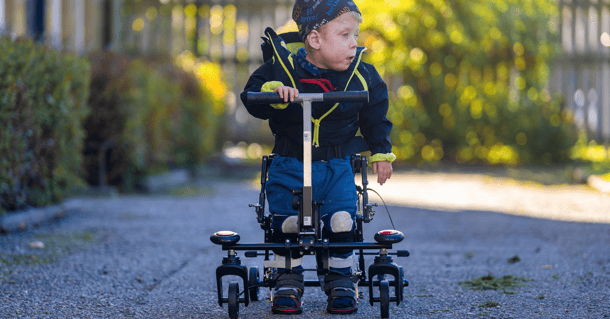
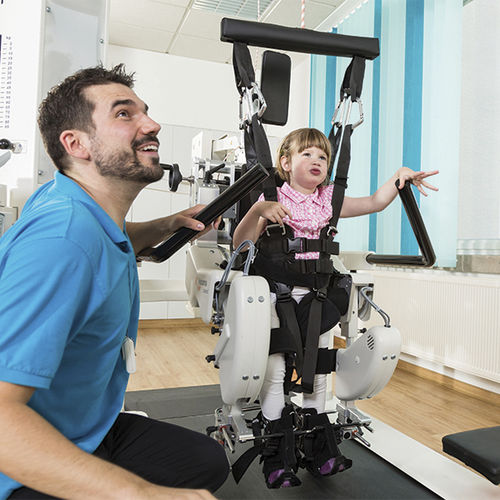
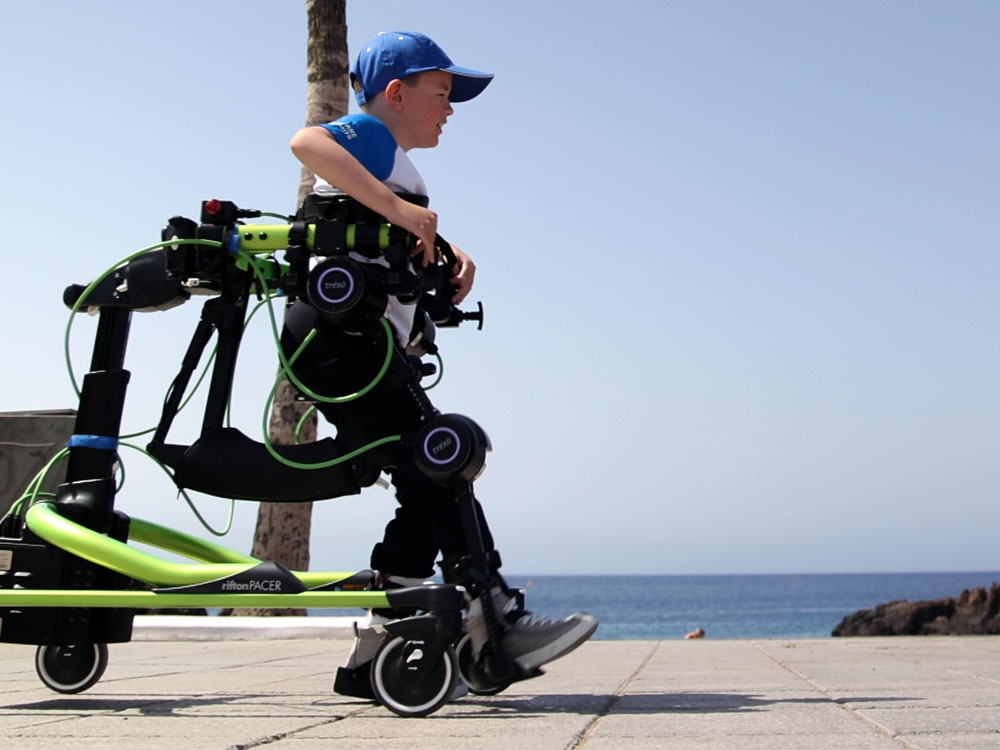
That is why in Europe we have countless assistive devices for this: complicated frames with wheels in which you can strap the child (after having it adjusted by a professional), rollator-like aids for different body heights, or robots like the Lokomat, which can repetitively train the movement of hip, knee, and ankle joints. All fantastic and effective for learning to walk, often used in combination. Many families have three or more devices for a single child that they use for therapy, and they get new ones from insurance companies as soon as the child grows bigger. Wonderful, but very expensive, often not really user-friendly, and certainly not available to the poorer population of this world, neither in India nor in South Africa.
The Vision: An All-in-One Wooden Robot
We decided to develop a gait trainer that could ideally solve everything at once: it should offer repetitive training like a robot, it should "grow" with the child as they get bigger, it should offer effective and challenging training for children who can already walk well, but also be suitable for children who can barely move their legs or bear weight under their own strength. It should be extremely easy to operate and adjust without requiring a specialist. And many features that correct specific CP misalignments were to be integrated directly, such as leg crossing (scissor gait), the inability to extend the legs (crouch gait), or equinus foot (toe walking).
As with so many projects, the utopian requirements were:
- It must do everything.
- It must cost nothing.
And the "worst" of all: it also had to be made of wood! An all-in-one, do-it-all robot made of wood.
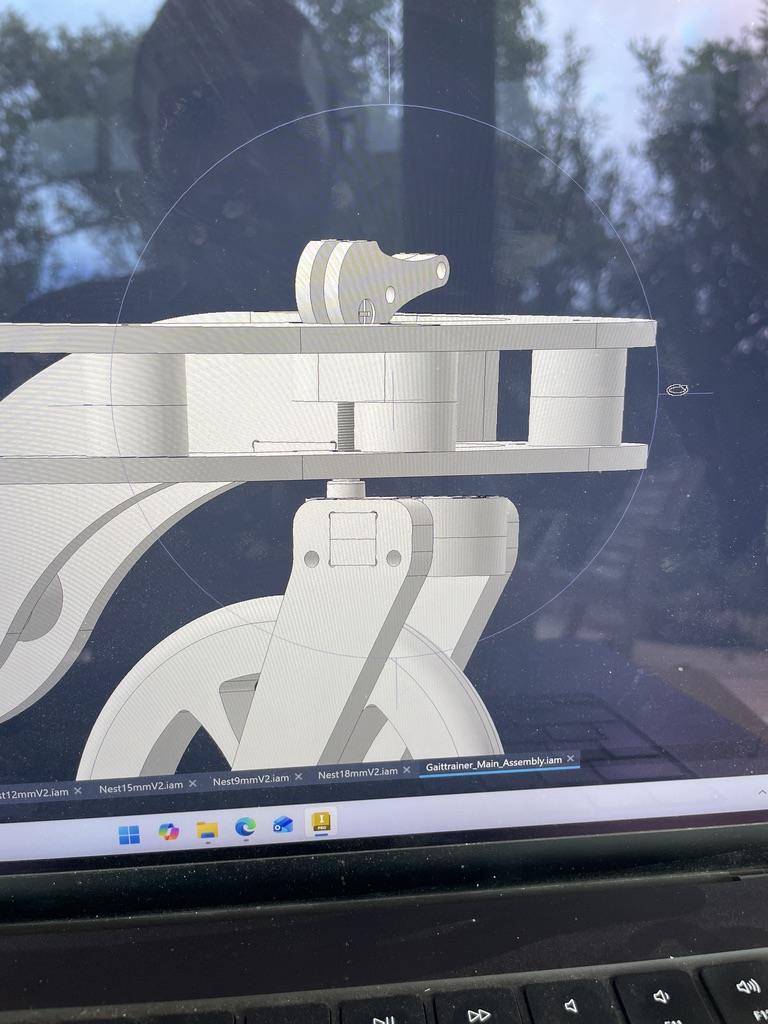
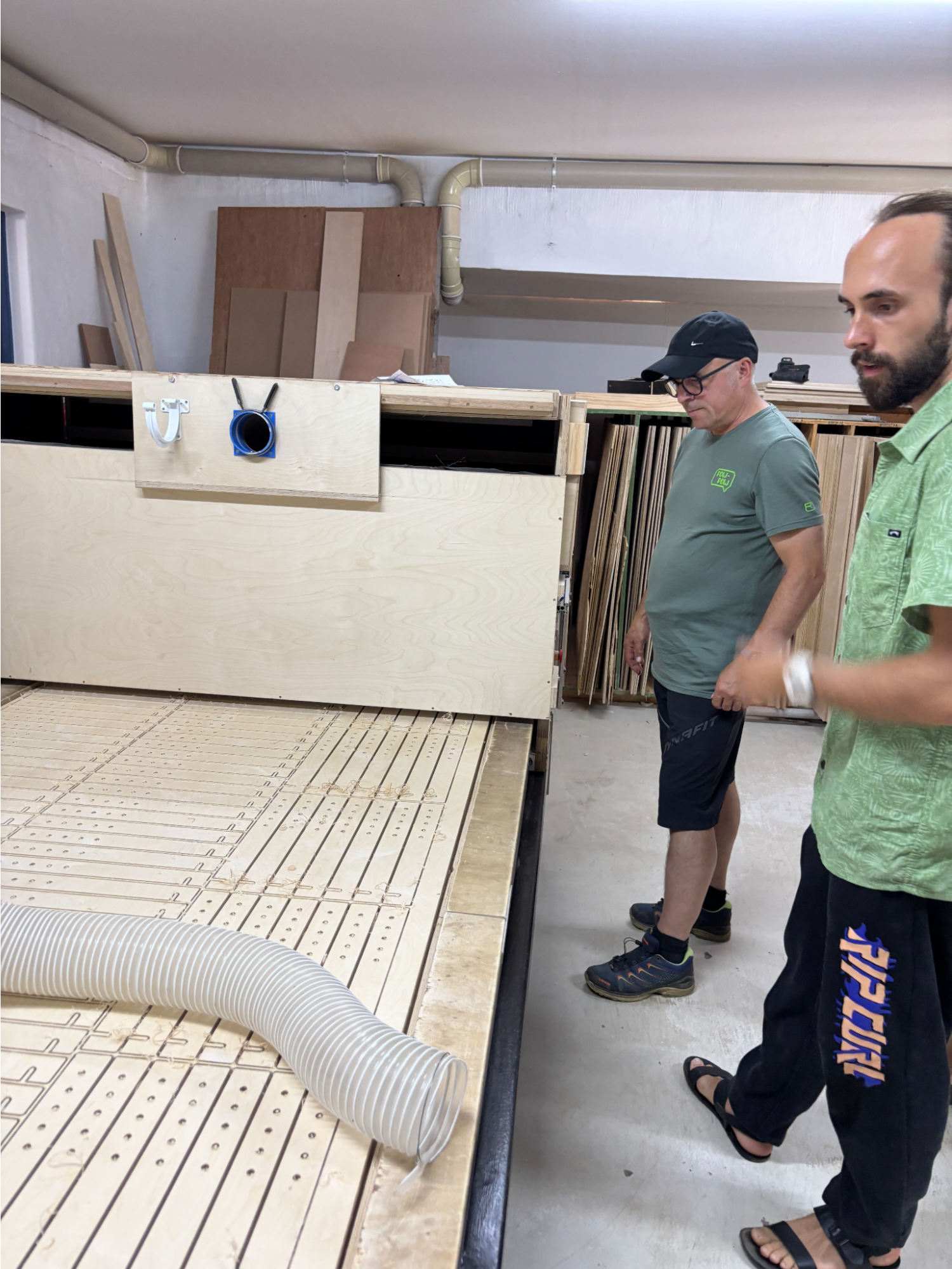
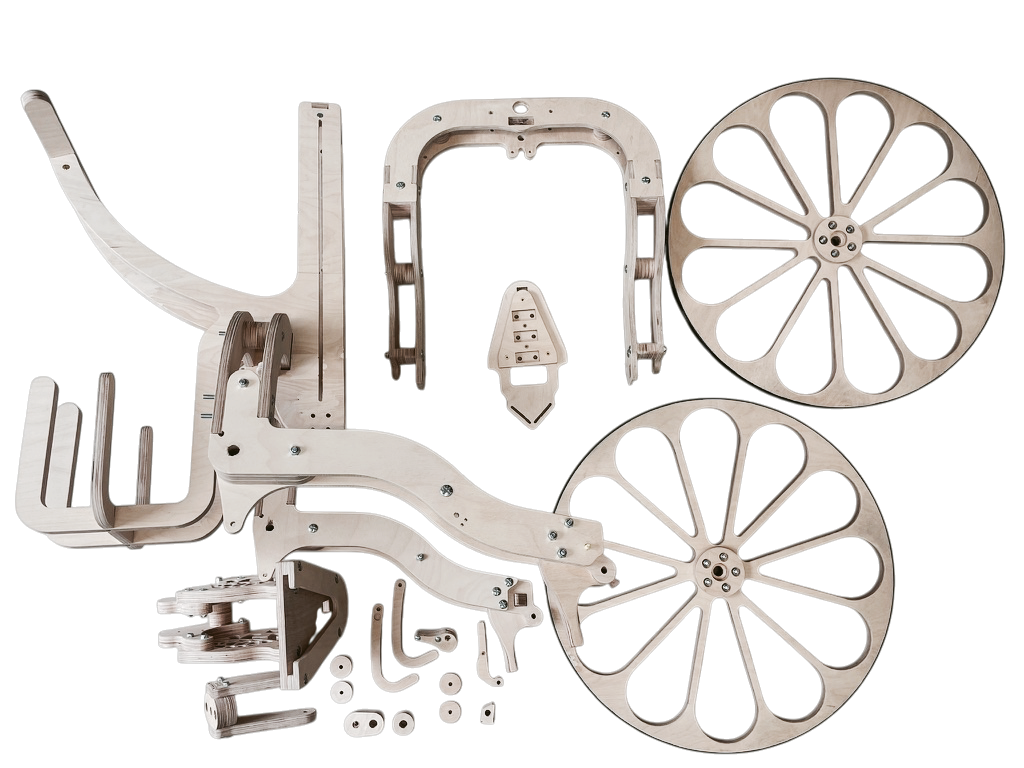
In South Africa, they have CNC machines for this that can precisely cut wooden panels of various thicknesses into any shape. Nowadays, basic CNC machines for wood are fairly affordable or can even be built yourself with patience and instructions from the internet. You design the product once with CAD software on the computer and can then produce it as many times as you like. Perfect.
Why Wood, Anyway?
The most obvious best solution, as with all other assistive devices, would naturally be metal or aluminum. Sturdy, can get wet, lasts forever. But the first problems already start during manufacturing. You need to know how to build it, often with only semi-trained personnel. I, for one, would have had a hard time welding, riveting, and bolting a gait trainer together, even though I worked a lot with metal during my training. Plastic, on the other hand, is also complicated, not always available in the exact same quality worldwide, and not cheap in injection molding for small production runs either.
So it became clear relatively quickly: it had to be wood. Timion in South Africa is already well versed in woodworking and uses it for many products. The same was true for me in India; there, too, we had a small carpentry workshop that made aids for physically disabled individuals. Furthermore, wood is even experiencing a revival in Swiss hospitals: it feels warm, provides good acoustics and tactile sensations, creates a pleasant atmosphere, and is sustainable. So if the gait trainer is ever thrown onto the street somewhere, it will not contribute to more microplastics in the world, but simply decompose, much to the delight of the fungi.
Another incredibly important criterion for the design: the device absolutely had to fit inside the small tin shacks. The shacks in South Africa are usually extremely cramped and lack space. If that is not possible, the exact thing we want to avoid happens: the device stays outside, gets wet, and eventually breaks! So, along with all the other already crazy requirements, it also strictly had to be foldable.
The Design Process and Creative Rituals
So I hit the books. A full six months before my trip to South Africa, I started brainstorming. I sketched countless drafts on paper, discussed them with my robotics teammates, engineers, and the team in South Africa.
We needed big wheels. Everyone knows it: even a standard tiled floor with small ridges or gravel makes pushing a shopping cart frustrating. A stroller is a bit better, depending on the wheel size. The bigger, the better. I finally came up with the idea of simply using small children's bicycle wheels. But then we hit the next problem: they get stolen in South Africa. Yes, you heard that right. They are even stolen from a disabled child who cannot walk. Small stroller-sized wheels get stolen too, if they are "good." All the more reason to design the whole thing specifically out of wood: strong and light enough for a child, but too weak for heavy loads. Otherwise, the gait trainer would end up being used as a wheelbarrow for adults.
The next challenge was the weight. For a small child who can only walk under their own power with great difficulty, every single gram makes a difference in how easily they can move in the device. That is why I chose a sandwich structure: two thin layers of wood connected to each other via bracing struts. With struts, an adult can stand on it. Without struts, the wood would snap immediately. A similar approach is used with sandwich structures in aerospace engineering to save weight.
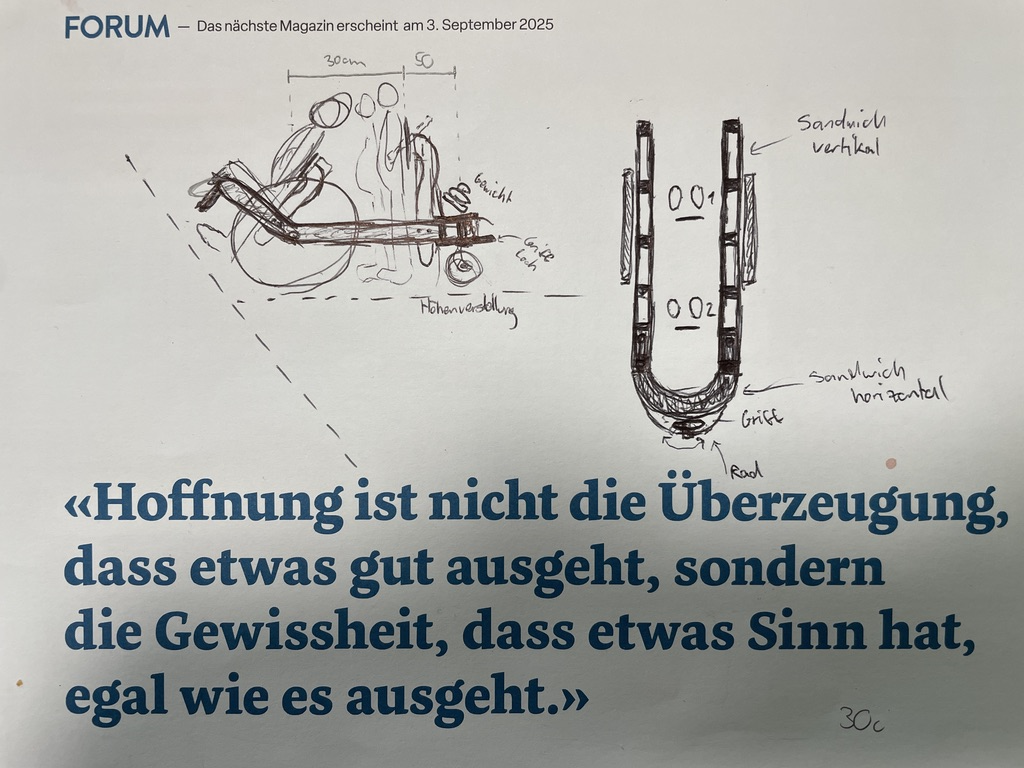
So I traveled to South Africa with a rough plan, sketches, market research (including a list of all relevant gait training devices on the market), requirement and utility value analyses, a schedule, and a first small 3D-printed model. I was able to stay in a small but lovely bungalow right on the company premises. It was wonderful.
I fell completely in love with surfing relatively quickly. Almost every morning and every evening I was out in the ocean. The dolphins came by almost daily at times, and you could have touched them if you had wanted to (though I never dared). Out there, I felt intensely connected to the elements, the power of the water, nature, and myself. I felt very present out there. I was tired in the evening and slept well.
Why do I mention all of this? Because I learned that these moments are essential for one's creativity. Back in Switzerland, I was usually 100% occupied with a project and thought about it day and night. While surfing, however, there was only me and the wave. Me and the dolphins. Me and my friends. No project. No brooding.
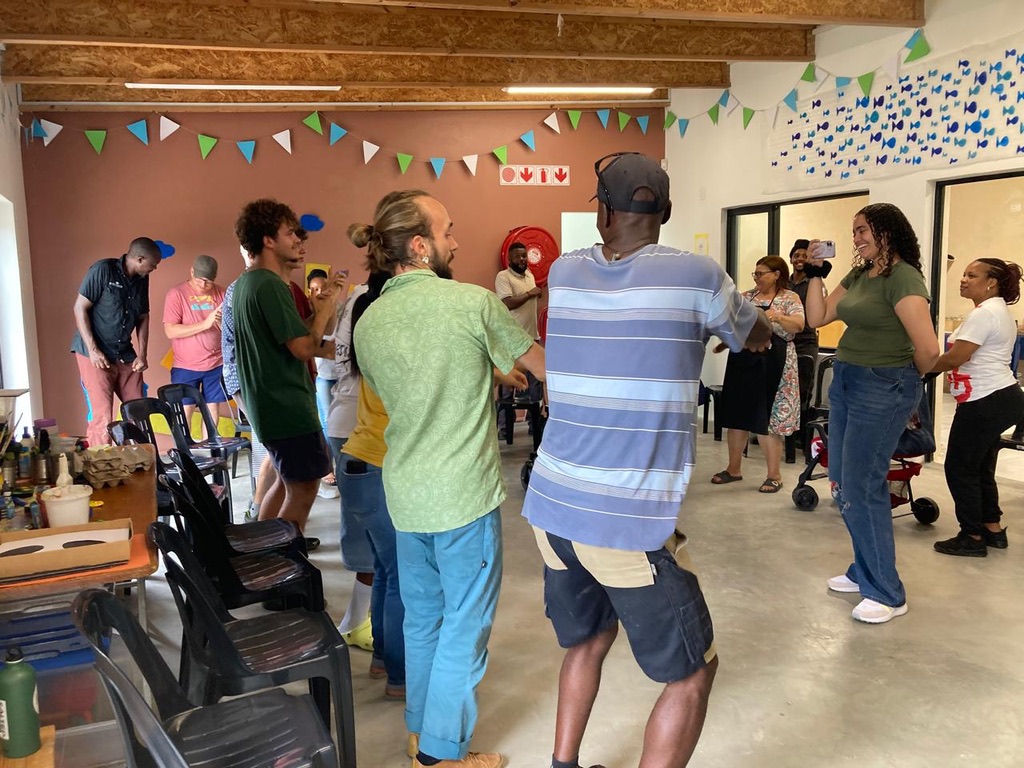
We had a second such ritual that I want to mention: every Monday, Wednesday, and Friday, we sang and danced together as a team. About half an hour every morning. Sometimes I was moved to tears, and with absolute certainty, every single person on the team was full of euphoria and feelings of happiness afterwards, even if you might have come to work on a Monday morning with a long face.
These two rituals, surfing and singing together, taught me a great deal about creativity and inspiration. Afterwards, I was always brimming with inspiration and good ideas, and sometimes the best solutions simply popped up when you were not even looking for them directly.

The Art of Omission and the Magical "Click"
But then came the biggest challenge in the design process once we had built the first prototypes. Yet it was also the exact challenge that gave me the most joy: making something highly complex as simple as possible.
Because virtually all existing gait trainers excel at offering a vast array of functions and adjustment options. This inevitably results in a very complex device that can de facto only be adjusted by a trained specialist. Some examples of this are the NF-Walker, Trexo Robotics, or the Lokomat. In South Africa, however, a mother or a local therapist must also be able to adjust the device to the child very easily and without assistance. And above all, she must be able to secure the child in the gait trainer completely alone without help.
So I began consistently stripping things away. I quickly realized that many features considered "standard" were often not needed at all or were even counterproductive. A good example is hand grips. While they give the patient a sense of security, therapeutic and scientific evidence shows they are often detrimental to gait training. You learn to walk better and faster when your hands are free, since you are already supported and stabilized by the trunk in the device anyway. The same applied to countless adjustment mechanisms that such devices often have, most of which are never actually adjusted or can be avoided entirely with a clever, organic design.
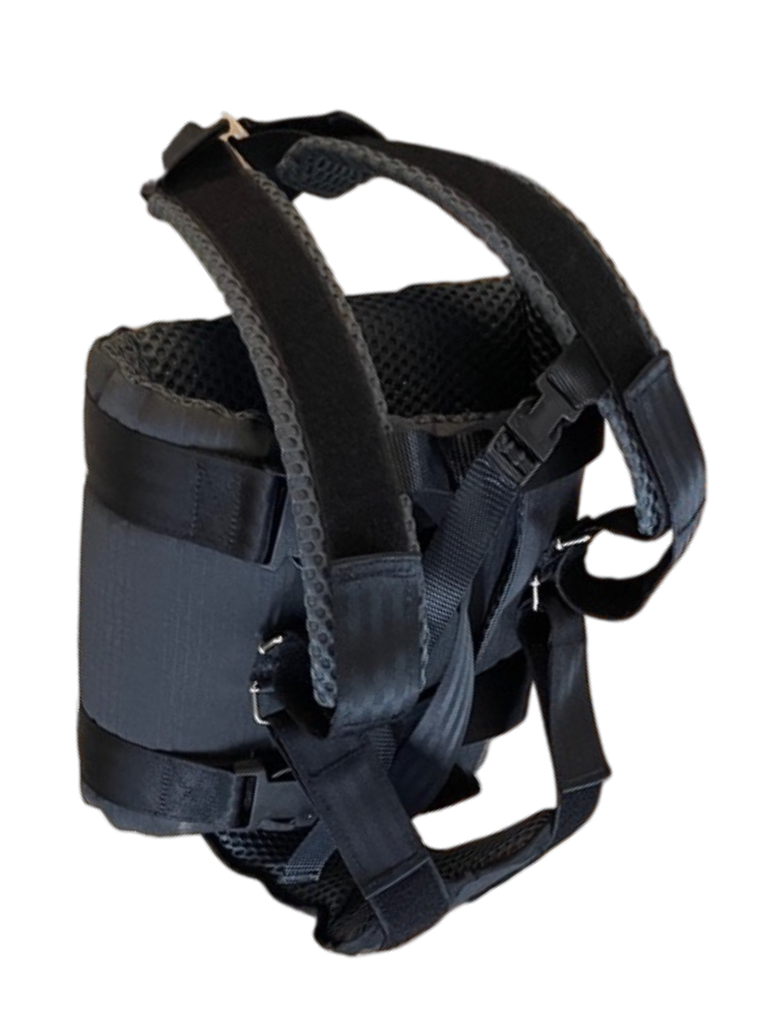
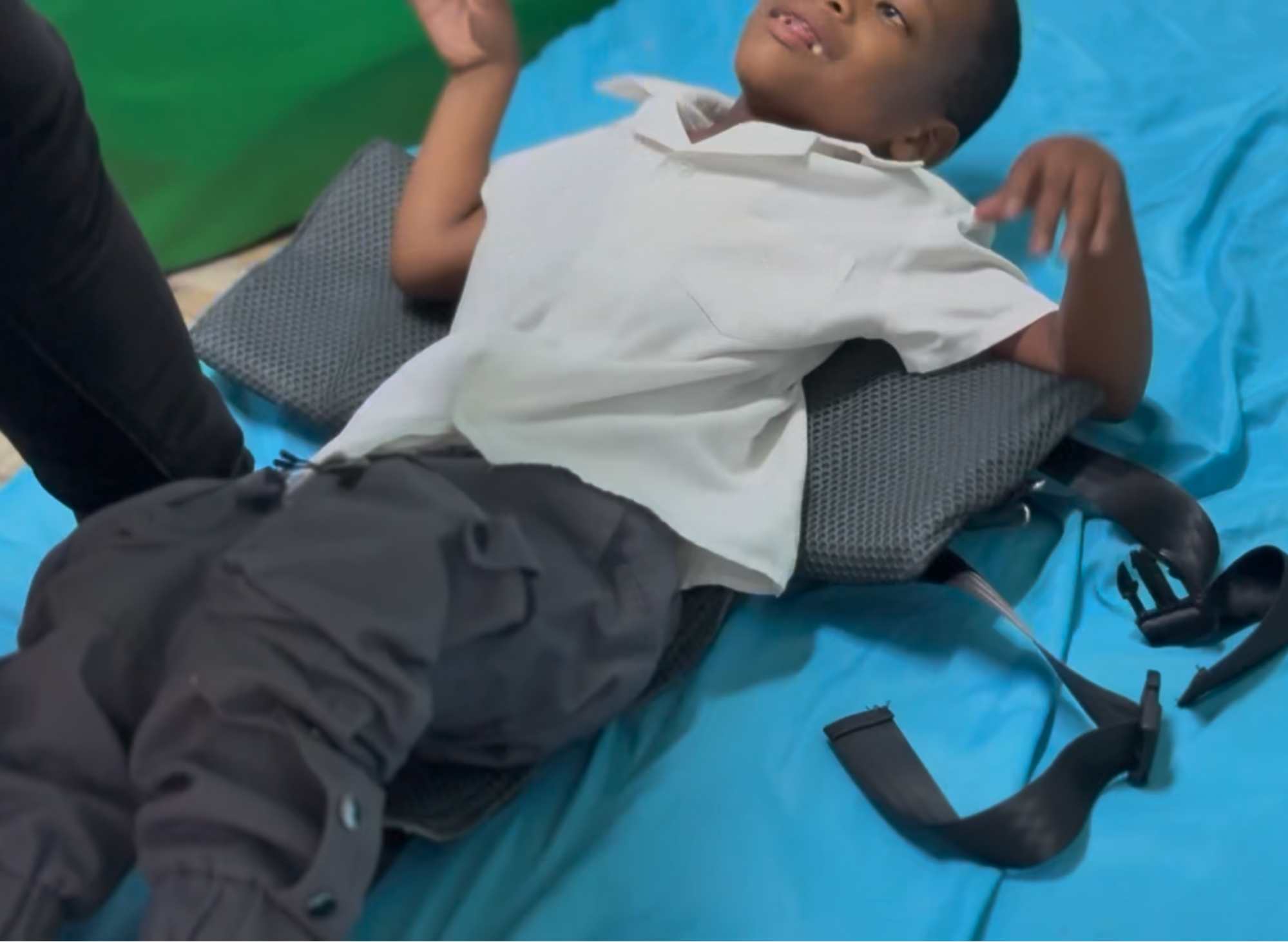
Then came the next problem: a single person had to be able to secure the child in the gait trainer alone. You cannot simply screw the fabric abdominal harness directly to the rigid frame. You had to make the abdominal harness detachable, along with the leg and shoulder straps. That way, you can comfortably put the harness system on the child while they are lying down.
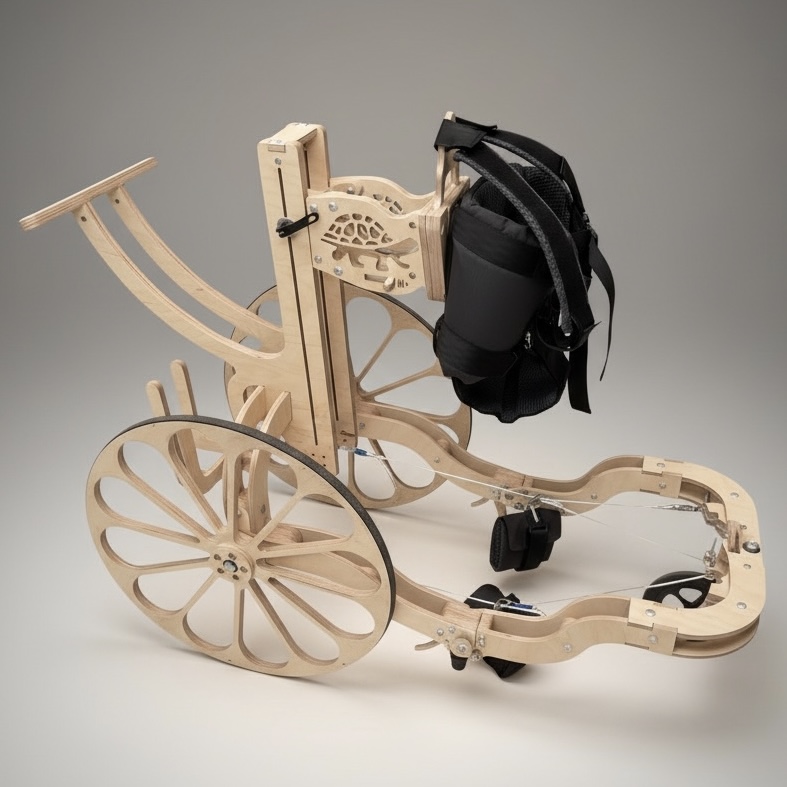
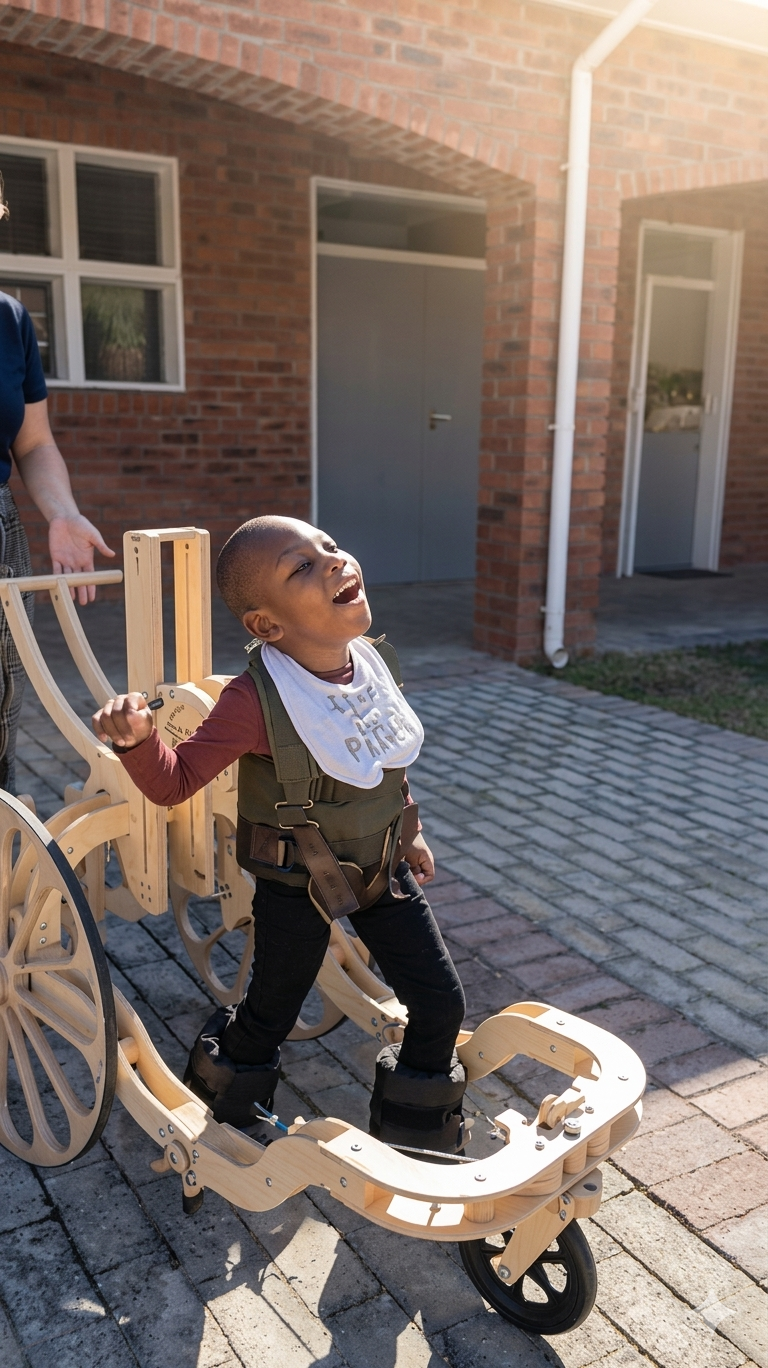
A small wooden plate was integrated directly into the sewing pattern of the abdominal harness. This wooden plate could then easily be slid into a slot on the gait trainer. A small spring-loaded latch then locks the child into the gait trainer without you having to do anything yourself. A solid "click" confirms that it is firmly locked, and via a small lever, you can release the mechanism again to take the child out.
I think these small, simple locking mechanisms for clicking the child in or folding the gait trainer are something I am most proud of. Not only because it makes using the gait trainer much easier, safer, and sturdier, but also because it sparked that look of wonder and amazement in the eyes of literally everyone who used it. It is hard to describe; it brings out this feeling of astonishment that this really is all that needs to be done. A feeling of wonder, of satisfaction at the loud and crisp "click" sound. Like a zipper that you finally manage to thread on the tenth try and that then glides smoothly shut, or like those magnetic clasps that simply find each other on their own. Creating these moments of delight where everything suddenly becomes effortlessly simple, that is what great design is all about for me.
The height can be adjusted very easily by setting a modified bicycle quick-release skewer with just one hand, locking infinitely and rock-solid. This allows any child from 2 years to over 10 years of age to be trained in it with a single device. As we know, one should ideally train full throttle up to age 8. So we needed a solution that covers this entire window of opportunity!
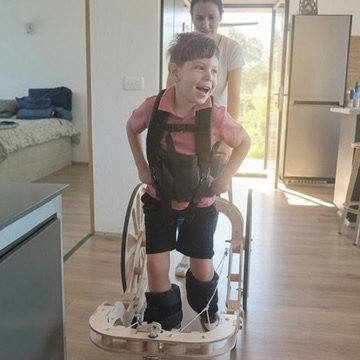
An often underestimated but essentially crucial part of the work was the design of the body interface. If this fails, the best mechanical construction is useless. The harness system must be comfortable and cover a wide range of body sizes. Here, my extensive experience in pattern design for physically disabled people and material selection came to my aid. The result of numerous iterations is an abdominal attachment that can be modularly expanded if needed. The final pattern integrates the aforementioned wooden plate directly into the fabric, establishing a solid connection to the latching mechanism.
An Overview of the Therapeutic and Economic Innovations
We improved the gait trainer step by step, prototype by prototype, and continuously tested it directly with CP children in clinics. In just 5 months, we were able to design a gait trainer that is fully production-ready and completely suited for daily use. The parents, children, and therapists loved it. Many wanted to buy our prototypes right away.
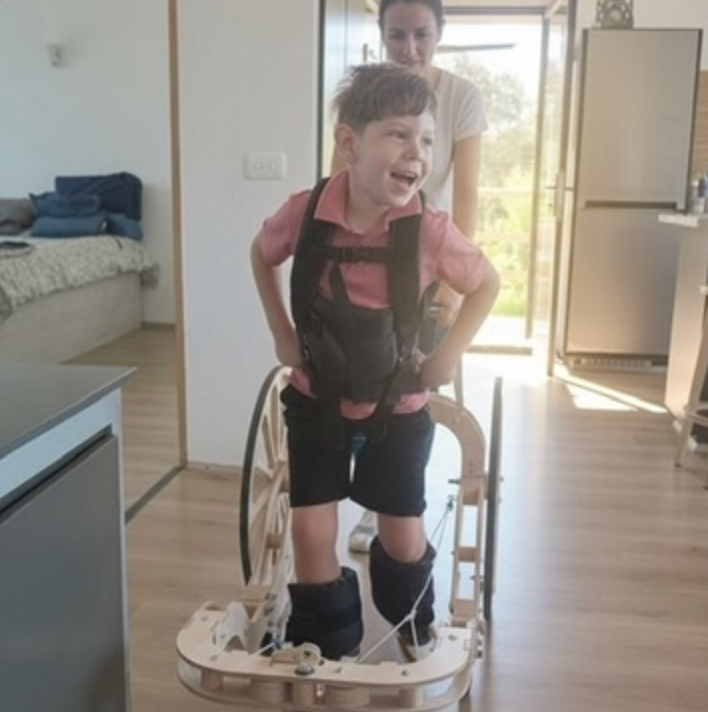
In fact, the gait trainer has an astonishing number of features that in Europe are usually only obtained by combining several different devices:
Intuitive Transfer
The child can be secured in the harness system while lying down and then transferred into the gait trainer. If you want to fold the gait trainer, you can do so effortlessly. And the rollers for anti-crouch gait training can also be flipped up with a single click.
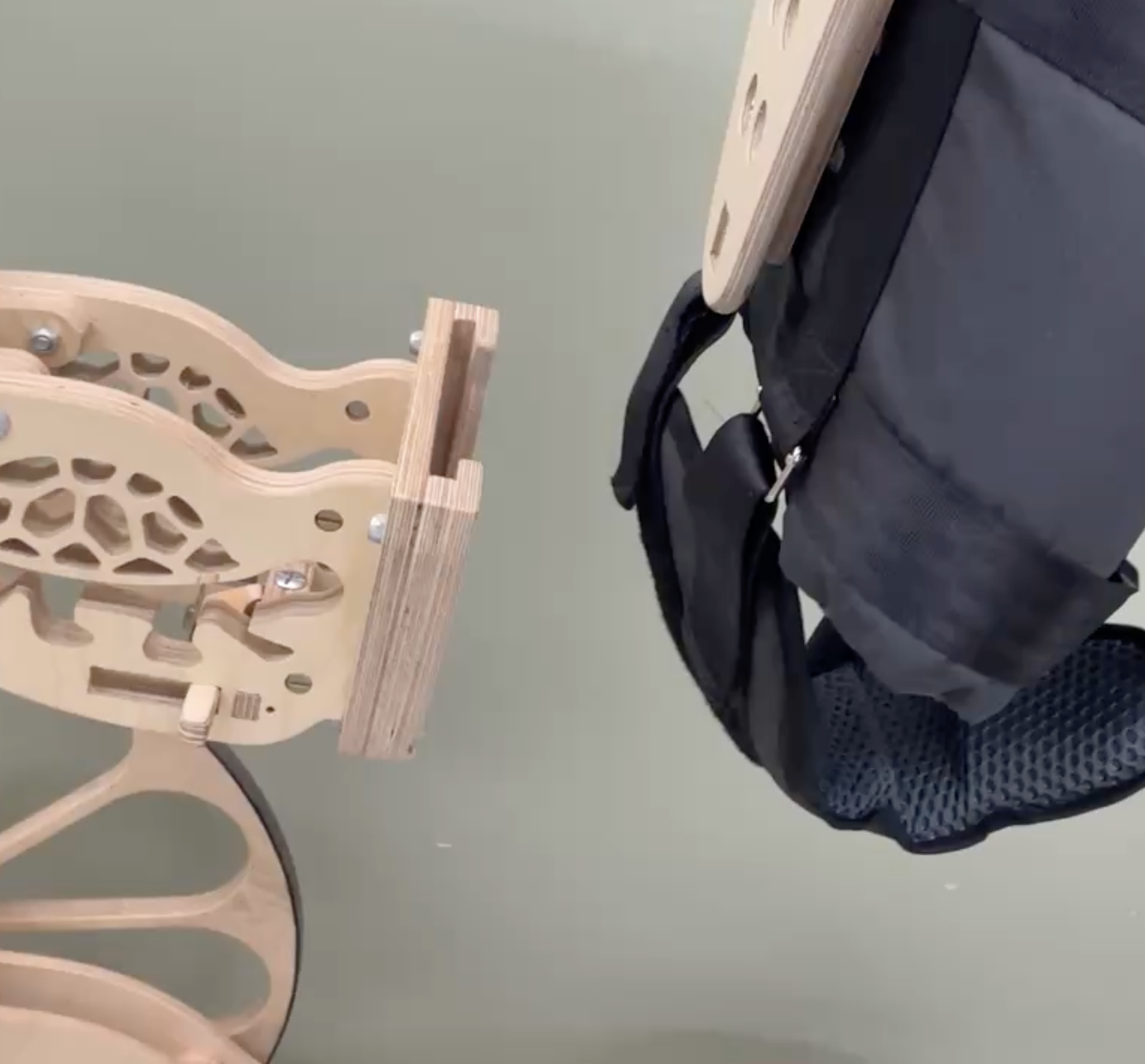
Adaptable Ergonomics & Off-Road Capability
With just a single gait trainer, children of all ages and sizes can undergo therapy. In addition, thanks to the large wheels, you can effortlessly navigate over uneven terrain.
Anti-Scissor Gait & Reciprocal Gait Guidance
Two lateral cord guides prevent the feet from crossing pathologically (anti-scissor gait). At the same time, this mechanical cord guidance from the feet forward and the knees backward controls the position of the legs: every time the child moves one foot backward, the other foot is automatically and gently guided forward.
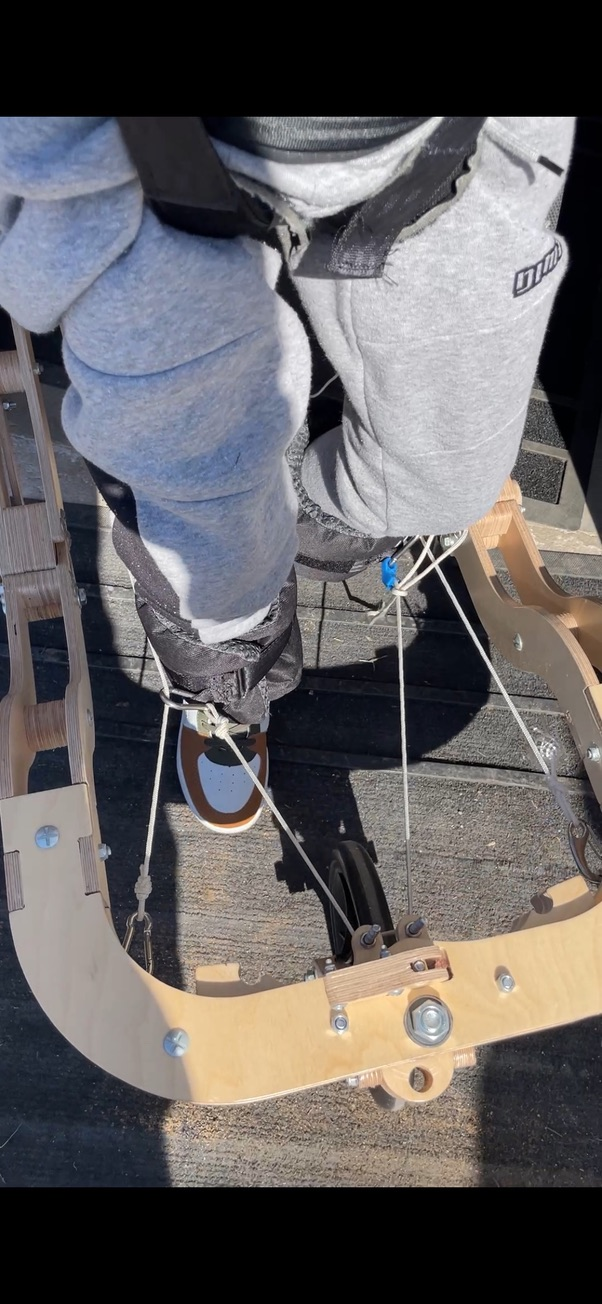
Integrated Body-Weight-Support (BWS) Training
This training, much hyped in health research, unloads body weight. While Western clinics use expensive robotic ceiling lifts for this, we achieve the same effect by flipping the front wheel backward. You then pack small sandbags into the rear basket, and depending on the level of support needed, the child's weight can be perfectly relieved through mechanical leverage.
Crouch-Gait Correction
This is a very common gait pattern where the child never fully straightens the knees and always keeps them slightly bent. When you flip the wheels backward in my design, small integrated crutches with rubber ferrules at the front touch the ground if the child does not extend their legs properly or wants to rest. Through these "crutches," you can actively compel the child to always walk with extended legs, because otherwise they collide with the ground on the crutches and get stuck.
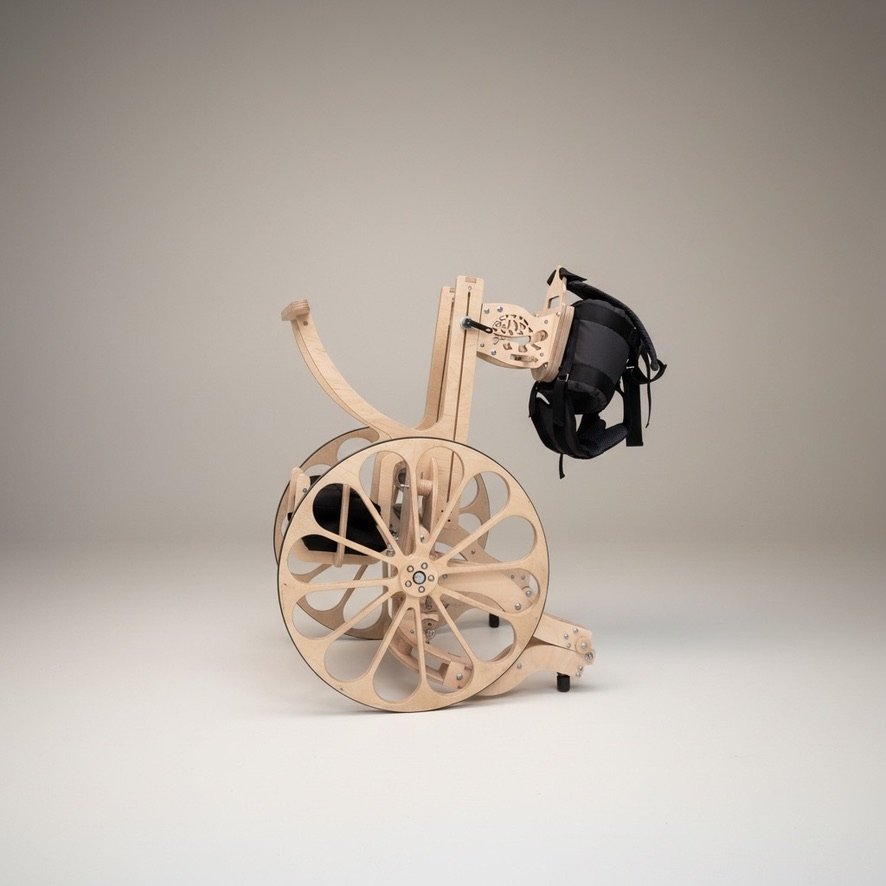
If you want to conduct the exact same type of therapy with these functions in Switzerland, you typically need at least two to three different devices that must be purchased anew every few years. This amounts to tens of thousands of francs. With my design, however, you only need to acquire a single gait trainer whose material and production costs are in the three-digit franc range.
It is already being produced in small batches by the organization Timion in Jeffreys Bay and is sold, gifted, and loaned to families, therapists, and hospitals. The gait trainer offers enormous potential due to its versatile applications, not only in South Africa, but absolutely also here in Switzerland or in other countries around the world.
The Vision: Decentralized Manufacturing Worldwide
Theoretically, the gait trainer could be manufactured in a large factory, shipped, and customers could then assemble it at home like IKEA furniture. This is already done in part, but so far only within South Africa.
But the true vision is not to ramp up centralized production to the absolute maximum and then ship the devices all around the world. Because then we face the exact same problem again: the gait trainer is available where a good logistics infrastructure exists, but once again out of reach for the people who need it most.
Rather, the vision is to train people on how to build an affordable CNC wood milling machine. That way, we can share the digital cut files with them and make the gait trainer, as well as other assistive devices such as wheelchair trays, standing frames, positioning seats, adaptive commode chairs, or therapy tables, accessible to small local workshops around the world. All you need is the digital CAD file, a few wooden panels, and a CNC router, and you can get started right away. Whether you are in rural India or in a hard-to-reach conflict zone. Daniel from Timion is already in close dialogue with partners in India and Tanzania to realize this vision and gain initial real-world insights.
The Outlook: The Future of Mechanical Locomotion
In addition to establishing decentralized local workshops worldwide, the next stage of development is already in the pipeline. Toward the end, I was able to build a mechanical add-on module as a first prototype that enables complete locomotion therapy.
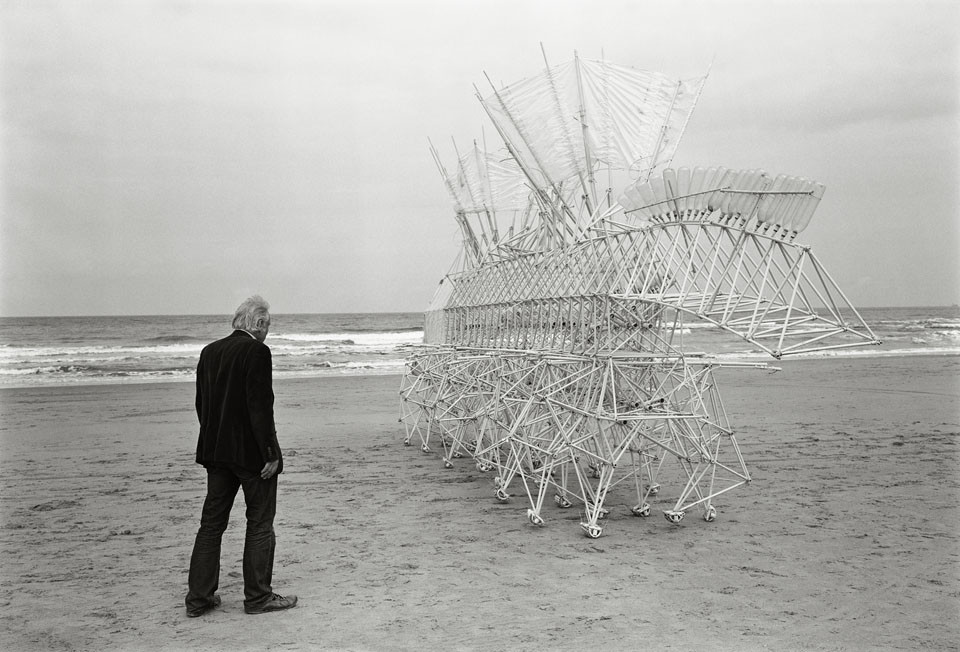
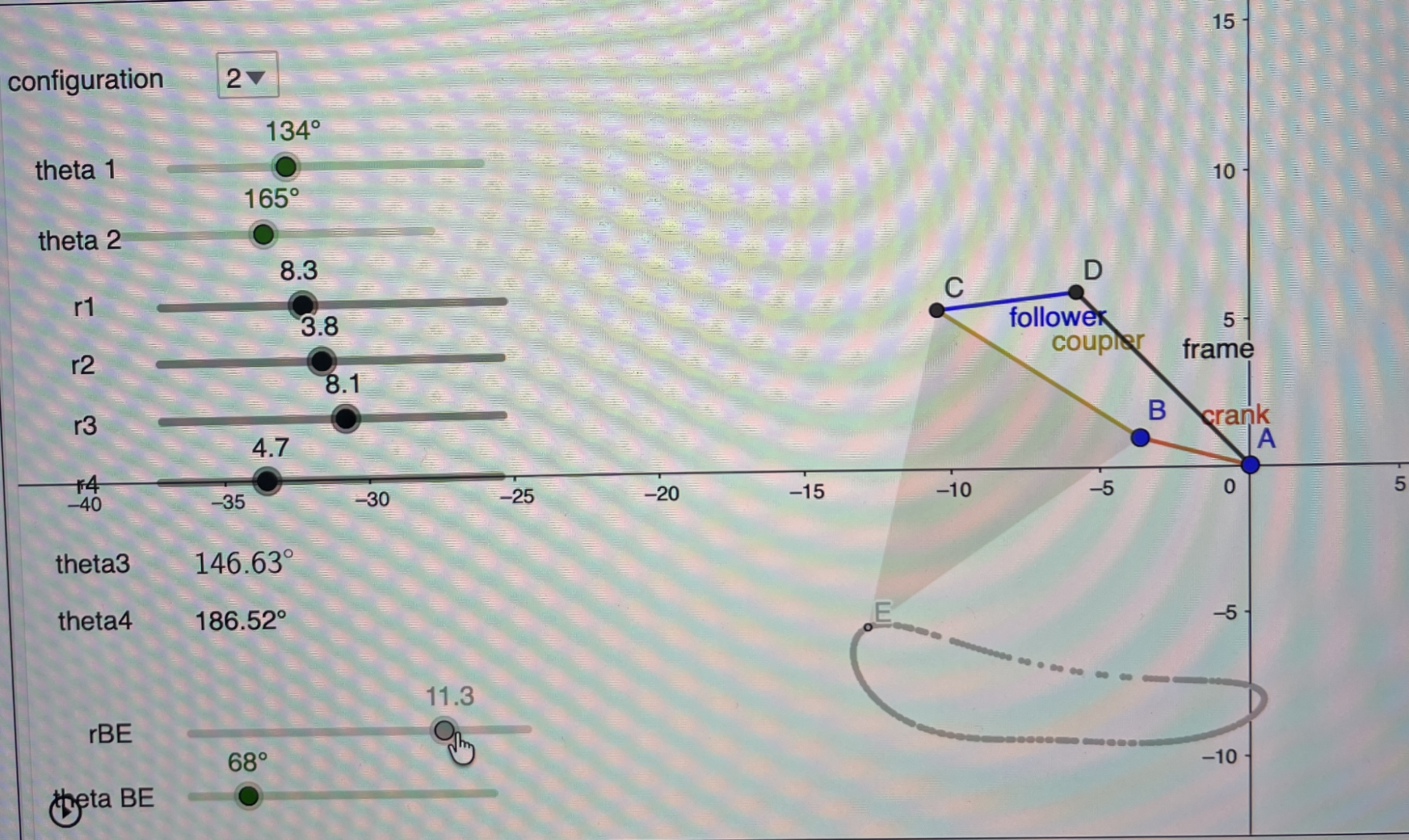
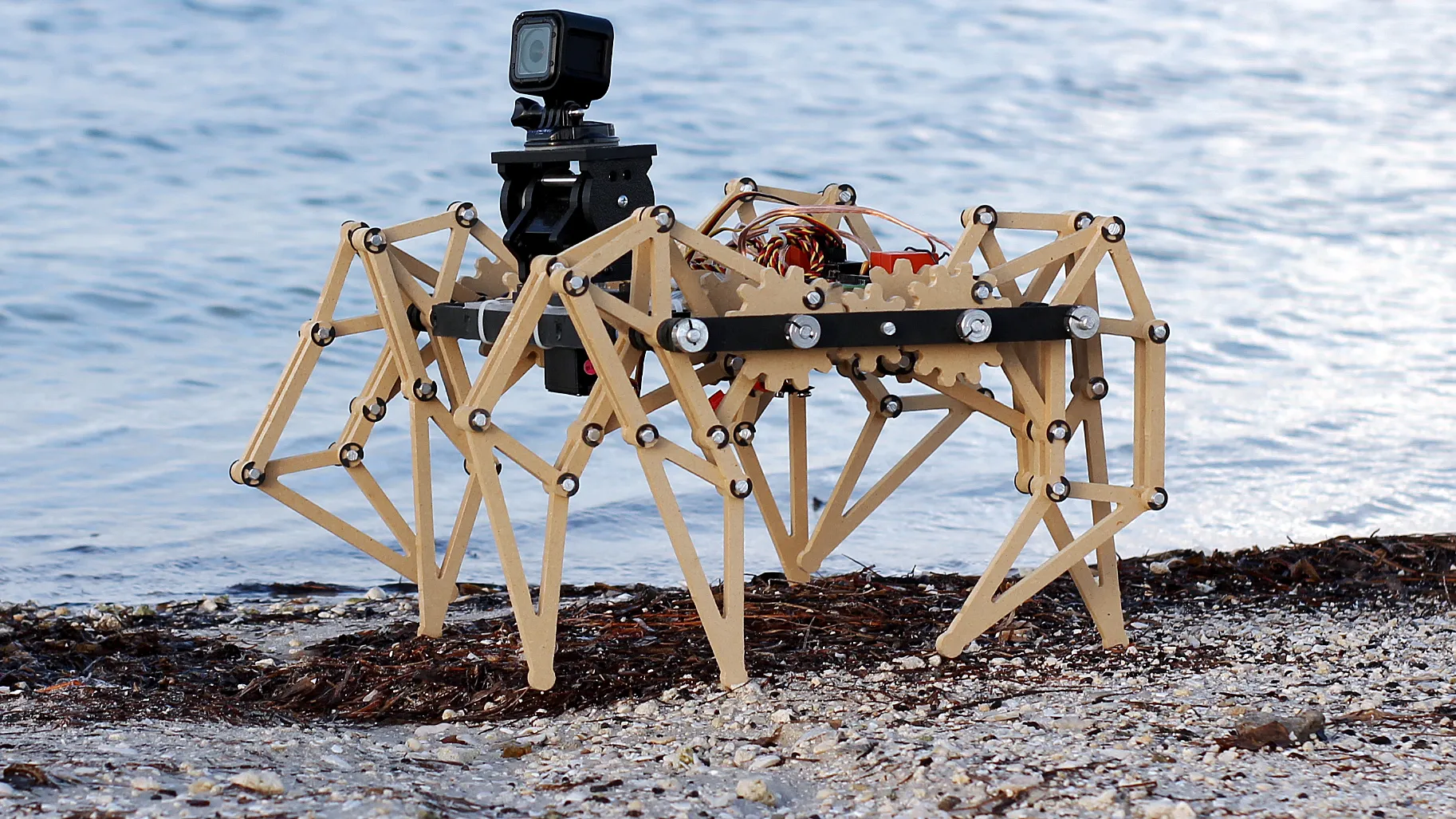
It is a purely mechanical system that, when the gait trainer is pushed forward, fully automatically guides the feet, knees, and hips in a perfect "walking motion." Inspired by the Dutch artist Theo Jansen and his fascinating "Strandbeests." In the future, this could allow even completely paralyzed children to receive therapy, much like complex robots do in Switzerland. That is what comes next. Unfortunately, my visa expired before I could make this specific design completely robust, safe, and ready for everyday use.
Newsletter
Receive a letter when I publish a new article. I do my best not to clutter your inbox with unnecessary junk.
No spam. Unsubscribe at any time with a single click.
Discussion
0 comments